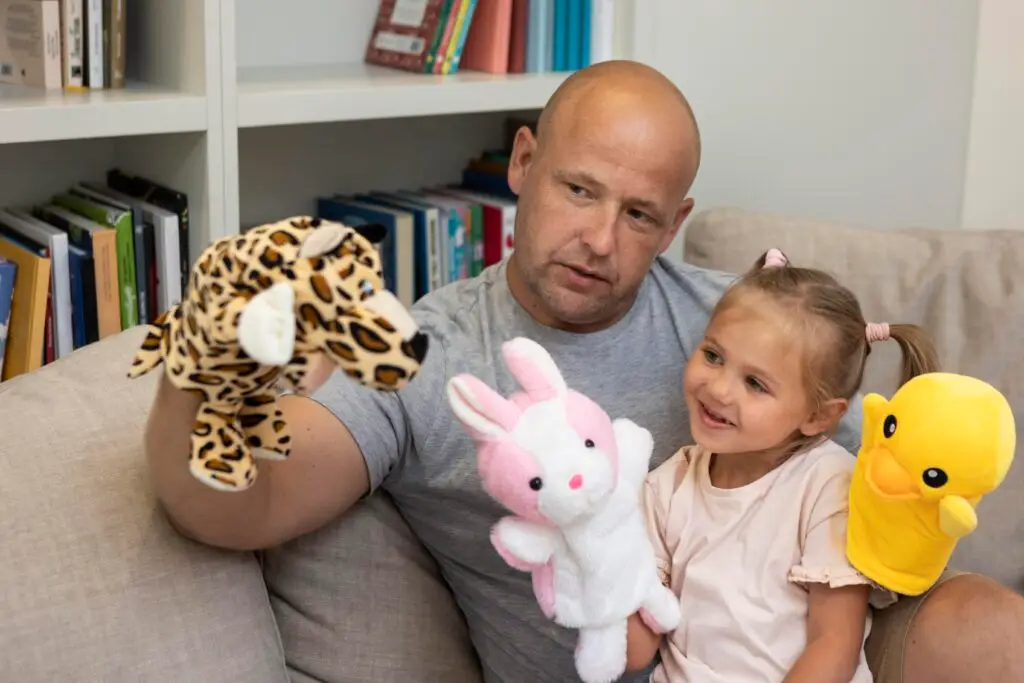
Puppets have long been more than just toys or stage props—they’re powerful tools that bridge the gap between imagination and reality, especially when it comes to engaging children. In a world where kids are bombarded with digital screens and fast-paced entertainment, puppets offer a timeless, hands-on way to tell stories, spark creativity, and foster meaningful communication.
Breaking Barriers with a Simple Puppet
I was working in a remote community with children from tough backgrounds. We were running a children’s Bible program, with music, crafts, puppets, games, and other fun activities. After one session, a little boy came up to the front and sat down in the chair next to me. I tried to talk to him, starting with simple questions like, “What’s your name?” He didn’t respond; he just stared straight ahead, avoiding eye contact. I persisted with different questions, but his response remained the same—silence.
Sitting beside me was a puppet from the drama we’d performed during the program. On a whim, I picked it up, slipped it onto my hand, and began talking to the boy through the puppet. His little face lit up instantly. I asked him the same questions I’d already tried, but this time, he responded. He felt so comfortable chatting with the puppet that it broke down the barriers, allowing him to converse with me directly as well. I was fascinated to see what a powerful tool the puppet could be—how it engages children and elevates communication to a whole new level.
It was a revelation about the unique role puppets play in connecting with young minds.
The Art of Storytelling Through Puppets
At their core, puppets are storytellers in disguise. Unlike books or videos, which can feel passive, puppets bring narratives to life in an interactive, three-dimensional way. Children aren’t just listening to a story—they’re participating in it. A puppet can embody a character with exaggerated expressions, silly voices, and dynamic movements, making abstract concepts tangible and relatable.
This creative approach taps into children’s natural love for play, turning storytelling into an adventure. Research shows that such interactive methods enhance retention; kids remember stories told through puppets far better because they’re emotionally invested. It’s not just about the plot—it’s about the puppet’s “personality” that makes the tale stick.
Puppets also excel at addressing sensitive topics. In communities dealing with trauma, like the one I worked in, a puppet can discuss emotions, fears, or challenges in a non-threatening manner. Children might hesitate to open up to an adult, but a puppet feels safe—like a peer or a fantastical friend. This indirect communication allows kids to explore complex ideas without vulnerability, fostering empathy and understanding.
Taking Puppets to the “Next-Level”
Puppets speak a universal language of gestures, expressions, and imagination that resonates with children intuitively. For shy or nonverbal kids, like the boy in my story, a puppet acts as a buffer, reducing anxiety and encouraging self-expression. Psychologists often use puppet therapy in child counseling for this reason—it helps children project their feelings onto the puppet, making it easier to articulate thoughts they might otherwise keep bottled up.
Creatively, puppets ignite innovation. Kids can use them to invent stories. This hands-on process builds confidence, hones language skills, and encourages problem-solving. In group settings, puppet shows promote collaboration; children take turns voicing characters, negotiating plot twists, and performing for peers. It’s storytelling amplified—where a simple hand movement can convey joy, sadness, or surprise more vividly than a spoken description.
Moreover, puppets adapt to diverse needs. For children with learning differences, such as autism, puppets provide visual and kinesthetic cues that make interactions more accessible.
Whether in classrooms, therapy sessions, community programs, or at home, puppets empower adults to connect with children on their level, turning ordinary moments into extraordinary ones.
From my experience in that remote community, I learned that puppets aren’t just entertaining; they’re transformative. They helped those kids escape their harsh realities, if only for a while, and opened doors to communication that might have stayed shut. If you’re a parent, teacher, or caregiver, consider picking up a puppet next time you want to tell a story or spark a conversation. You might be surprised at what unfolds.
What are your thoughts on puppets? Have you had a similar experience? Share in the comments below—I’d love to hear your stories!