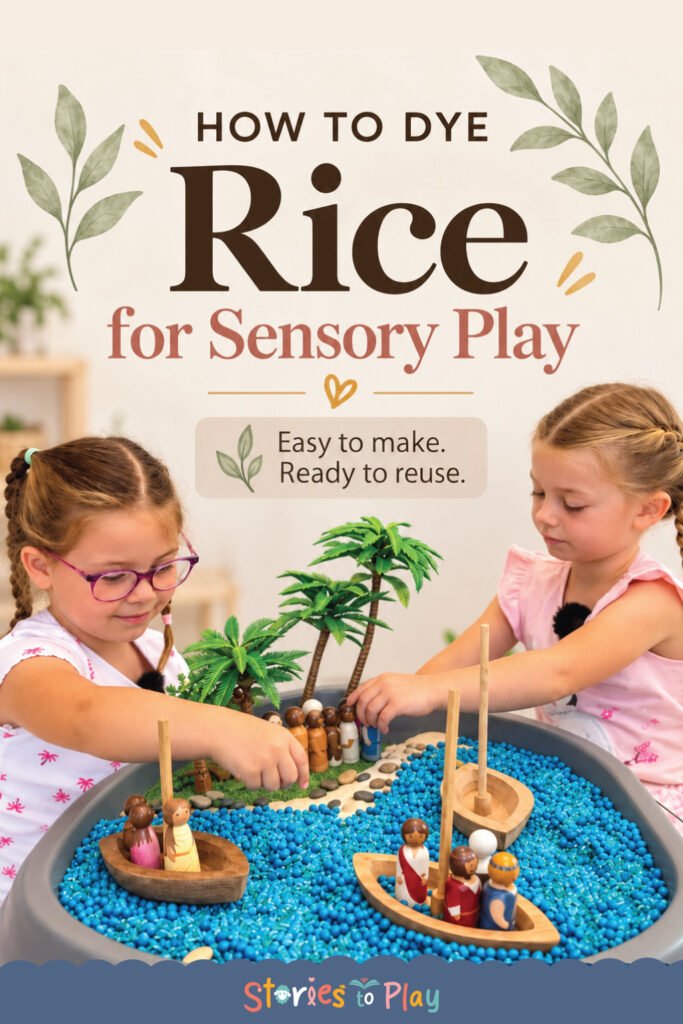
Learning how to dye rice for sensory play is quick, inexpensive and surprisingly easy. Once made, coloured rice can be stored and reused for sensory bins, small-world play and Bible story scenes.
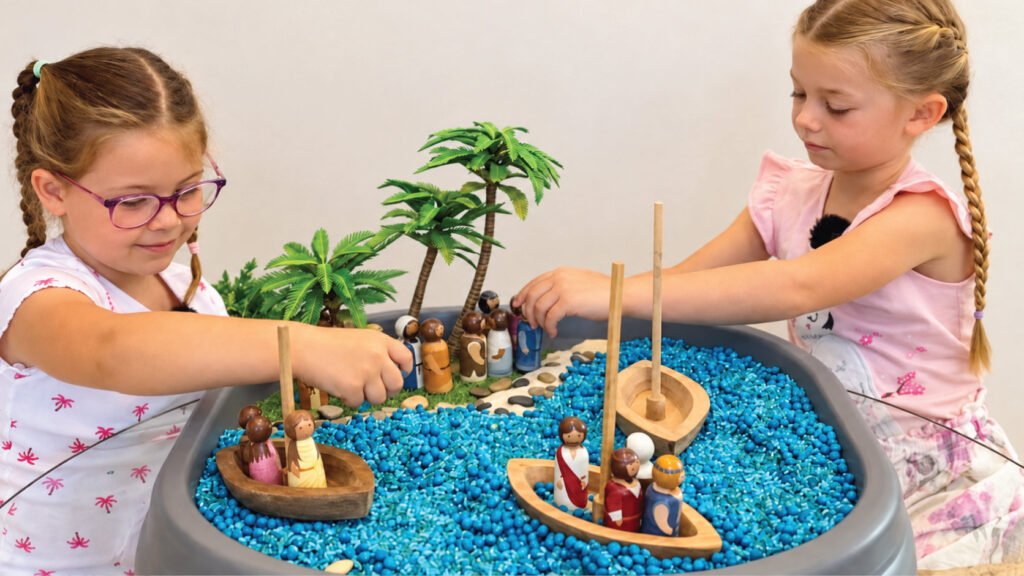
Use blue rice for water, green for grass, yellow for desert sand, or mix colours together for open-ended sensory play. Add some Storytelling Peg People, animals and a few simple props and you have an easy hands-on activity ready to go.
What You Need to Make Coloured Rice
For each batch you will need:
- 4 cups uncooked rice
White rice gives the most vibrant colours, but brown rice also works. - 2 tablespoons white vinegar
- 1 tablespoon liquid food colouring
- 1 large Ziplock bag
- Baking tray or large plate for drying
How to Dye Rice for Sensory Play
1. Add the rice
Place 4 cups of uncooked rice into a large Ziploc bag.
2. Add vinegar and food colouring
Add 2 tablespoons of white vinegar and 1 tablespoon of food colouring.
Liquid food colouring is easy to mix through the rice and works well for creating bright colours.
3. Shake
Seal the bag well.
Shake and massage the bag until the food colouring is evenly distributed through the rice.
This is also a fun step for children to help with.
4. Check the colour
Open the bag and check your colour.
If you would like a stronger colour, simply add a little more food colouring, reseal the bag and shake again.
5. Spread the rice out
Pour the coloured rice onto a baking tray or large plate.
Spread it into a thin, even layer so that it dries more quickly.
6. Allow the rice to dry
Allow the rice to dry completely before using or storing it.
To speed up the drying process, place the tray in a fan-forced oven at 80°C for approximately 1 hour. Check it occasionally, then allow the rice to cool completely before using it for play.
And that’s it! Your coloured sensory rice is ready to use.
Using Coloured Rice for Bible Sensory Play
Coloured rice makes an easy base for Bible story sensory bins and small-world scenes.
Try:
- Blue rice – Sea of Galilee, Red Sea or River Nile
- Green rice – fields, gardens and grazing areas
- Yellow rice – deserts and wilderness stories
- Brown or natural rice – roads, villages and rocky landscapes
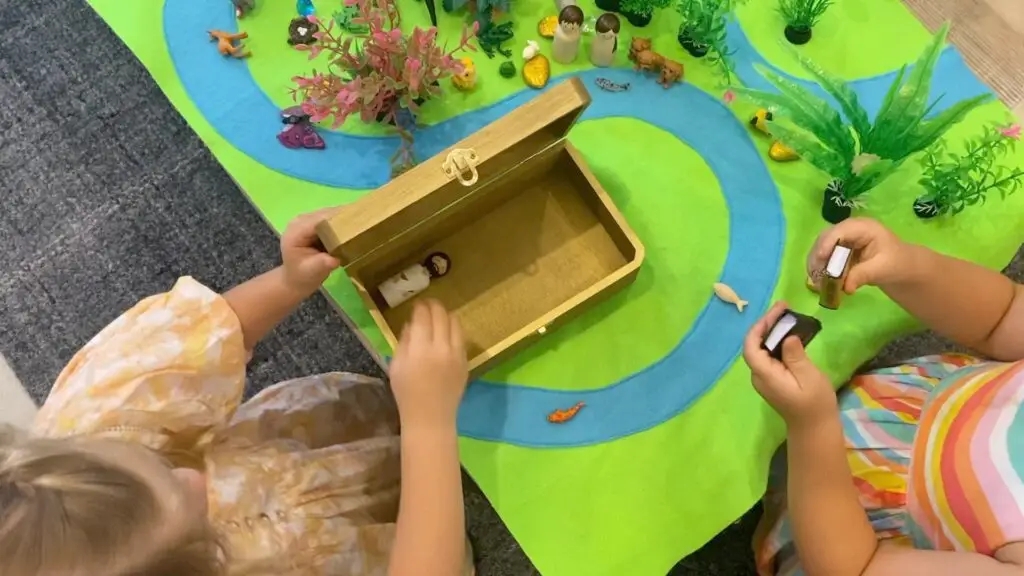
Add Storytelling Peg People, animals, stones, sticks, blocks or other simple props to create the scene.
For example, blue sensory rice can become the Sea of Galilee for Jesus Calms the Storm, while yellow rice, stones and a few peg people can quickly create a desert scene.
Try Other Grains Too
Rice isn’t your only option.
Try colouring other light-coloured dry foods such as:
- Chickpeas
- Quinoa
- Pasta
- Other grains
Different shapes and sizes create different textures, adding another tactile element to sensory play.
You can also combine several materials in the same sensory bin to create different parts of a scene.
How to Store Coloured Sensory Rice
Make sure the rice is completely dry before storing it.
Place it in an airtight container or sealed bag and keep it in a cool, dry place. Store colours separately if you want to reuse them for different sensory scenes.
If the rice becomes damp, smells unusual or shows any signs of mould, discard it.
Always supervise children during sensory play, particularly children who may put small items or uncooked rice in their mouths.
Simple Sensory Play That’s Ready to Reuse
Once you know how to dye rice for sensory play, you can make a few different colours and keep them ready for future activities.
A container of coloured rice, a few Storytelling Peg People and some simple props are often all you need to turn a Bible story into a hands-on scene children can explore, play with and retell.