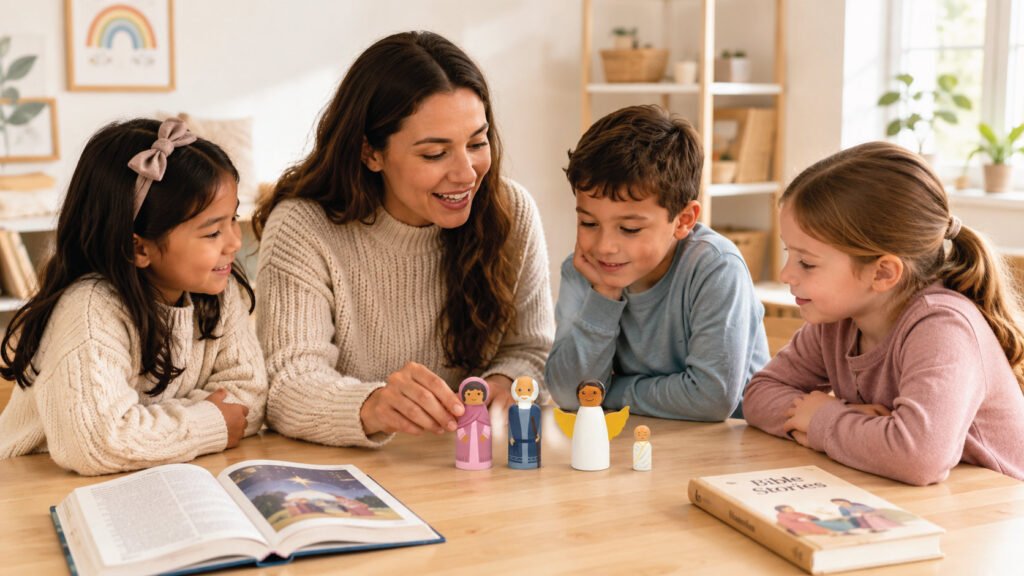
Bible stories are easier for children to follow when they can see what is happening. Storytelling Peg People give children something visual and hands-on to connect with while you read, tell or explore a Bible story.
You don’t need an elaborate setup or lots of preparation. Here are some simple ways to use them.
1. Act Out the Story as You Tell It
Choose the characters you need before you begin and place them beside you.
As you tell the story, introduce each character when they appear. Move the dolls to show what is happening.
For example, when telling David and Goliath:
- Place Goliath on one side of the table.
- Bring David into the scene when he arrives.
- Move David towards Goliath as the story progresses.
- Lay Goliath down when David defeats him.
Keep the movements simple. The dolls are there to help children follow the story, not distract from it.
2. Create a Simple Scene
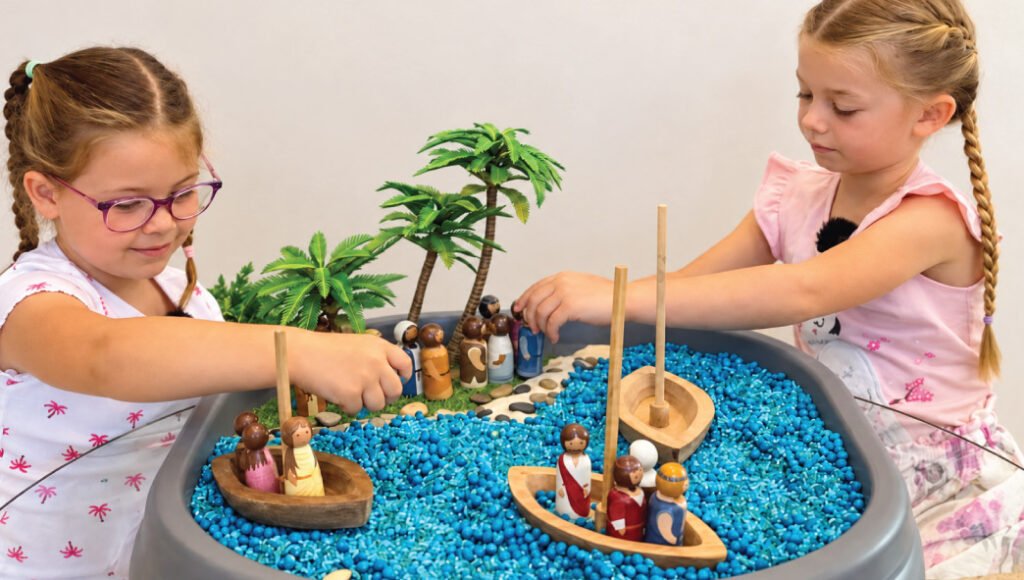
A few everyday items can quickly create the setting for a Bible story.
Try:
- Blue fabric or coloured rice for water
- Brown fabric or sand for the desert
- Blocks for buildings or city walls
- Stones for mountains and roads
- Sticks or small branches for trees
- A small basket for baby Moses
- Toy animals for Noah, shepherds or farm scenes
You don’t need to recreate every detail. A few simple props are usually enough for children to understand where the story is taking place.
3. Let Children Retell the Story
After you have told the story, hand the characters to the children and ask:
“Can you show me what happened?”
Let them move the characters and tell the story in their own words.
If they get stuck, use simple prompts:
- Who came first?
- What happened next?
- Where did they go?
- Who did they meet?
- What happened at the end?
Retelling is a simple way to see what children remember and which parts of the story they understood.
4. Give Each Child a Character
When teaching a small group, give children different characters to hold.
Tell them when their character enters the story and let them place or move the doll.
This works particularly well for stories with several characters, such as:
Children who are actively involved are often more engaged than children who are only listening.
5. Pause and Ask Questions
Use the dolls to stop at different points in the story and talk about what is happening.
Try questions such as:
- What do you think will happen next?
- How do you think this person feels?
- Why do you think they did that?
- What would you have done?
- Where do you think they are going?
You don’t need lots of questions. One or two well-chosen questions can create a useful discussion.
6. Leave the Story Set Up for Play
When the lesson is finished, don’t be too quick to pack everything away.
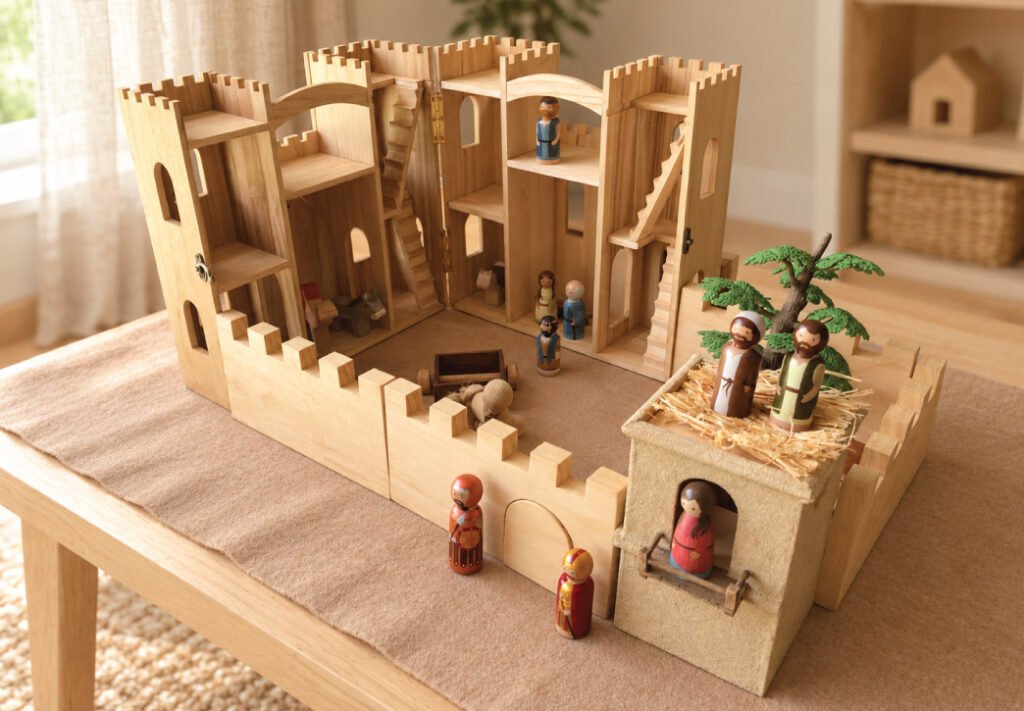
Leave the dolls and simple props available and let children play with the scene.
You may find that they naturally repeat parts of the Bible story, create conversations between the characters or explore the story in their own way.
There doesn’t always need to be another structured activity.
7. Use Them While Reading a Children’s Bible
Storytelling Peg People don’t need to replace reading.
Place the characters beside the Bible and move them as you read together. Children can also find the correct character whenever a new person appears in the story.
This is an easy way to make regular Bible reading more interactive without adding much preparation.
8. Keep It Simple
You don’t need a carefully styled play scene every time you tell a Bible story.
Sometimes all you need is:
A Bible + a few characters + five minutes.
Choose the people in the story, place them on the table and start telling.
The aim isn’t to create the perfect setup. It’s to give children a simple, hands-on way to see, hear, explore and retell the Bible story.